
In This Article
Your sonic handle is the engine. The head is the tire. Nobody buys a sports car and then drives it on bald rubber, yet plenty of us do exactly that with our toothbrushes. We keep a splayed, tired head going for six months because the handle still buzzes happily.

Here’s the catch with replacement brush heads compatible with sonic toothbrushes: the market is a minefield. Near-identical listings, wildly different price tags, and “fits all” promises that don’t always survive contact with your actual handle. The American Dental Association advises swapping toothbrushes every three to four months, or sooner if the bristles look matted or frayed, and that includes the head on a powered brush. So the real question isn’t whether to buy replacements. It’s which ones, and how many at a time.
This guide does the homework. I compared seven real options: four genuine Philips Sonicare packs, two third-party snap-on multipacks, and one Waterpik alternative for a different ecosystem. For each, you’ll get what the specs mean in practice, what aggregated reviews say, and who should skip it. You’ll also get a plain-English breakdown of universal fit, a cost-per-head calculator, an honest look at the bristle wear indicator, and a brush head replacement schedule you can actually follow.
One note on method. Everything here rests on published specs, retailer listings, and the aggregated sentiment of real customer reviews. No hands-on testing is claimed, and where I couldn’t verify reviews, I say so. Prices are ranges as of this research in November 2026, so check current price before you buy.
Quick Comparison Table: Replacement Brush Heads Compatible With Sonic Toothbrushes at a Glance
| Product | Pack Size | Price Range | Best For |
|---|---|---|---|
| Philips Sonicare C1 SimplyClean | 6 heads | Around $30-$35 | Households wanting genuine heads at the lowest cost per swap |
| Philips Sonicare C2 Plaque Control | 4 heads | Roughly $30-$45 | Everyday all-around cleaning with smart-reminder handles |
| Philips Sonicare S2 Sensitive | 2 heads | Check current price | Sensitive gums and enamel-conscious brushers |
| Philips Sonicare A3 All-in-One | 2 heads | Around $30-$40 | Buyers who want Philips’ premium head |
| Brushmo Plaque Control (BM928) | 8 heads | Typically $12-$20 | Budget stockpiling for snap-on Sonicare handles |
| ELFIN 8-Pack | 8 heads | Under $10 | Travel kits, guest rooms, backups |
| Waterpik Triple Sonic (STRB-3WW) | 3 heads | Around $20-$25 | Owners of Waterpik Sonic handles |
Look at the spread in this table: one pack covers about 18 months of genuine heads, another covers two years of budget ones, and the premium option costs several times more per head. If cost is your main filter, the two third-party eight-packs win on paper. If predictable fit and simple wear cues matter more, the C1 SimplyClean is the cheapest way to stay inside the manufacturer’s ecosystem. The Waterpik Triple Sonic is the odd one out, because it only works if you already own a Waterpik Sonic handle.
💬 Just one click — help others make better buying decisions too!😊
What Are Replacement Brush Heads Compatible With Sonic Toothbrushes?
Replacement brush heads compatible with sonic toothbrushes are swappable bristle attachments that connect to a sonic handle’s drive shaft, usually through a snap-on brush head collar or push-fit stem. They wear out within three to four months, restore cleaning performance, and must match the handle’s attachment system, not just its brand name.
That last clause is where people get burned. A sonic handle vibrates the bristles side to side, much like a manual stroke at far higher speed. Gear Patrol notes that Sonicare heads are elongated with rows of bristles moving side to side, which is a different animal from a round oscillating head. The attachment hardware is just as brand-specific:
- Most Philips Sonicare rechargeable handles use a click-on stem, and heads from the C1, C2, S2, and A3 families all fit it.
- Oral-B’s iO heads fit only iO handles. Retailer guidance is blunt that they aren’t backward compatible.
- The entry-level Philips One handle isn’t compatible with the standard snap-on heads, according to one retailer’s spec listing.
- Waterpik, quip, and other sonic brands run their own proprietary systems.
So “sonic” tells you how the head moves. It doesn’t tell you what it plugs into. Always confirm the handle model number first, then the head.
Top 7 Replacement Brush Heads Compatible With Sonic Toothbrushes: Expert Analysis
1. Philips Sonicare C1 SimplyClean (HX6016/77, 6-Pack) — lowest-cost genuine head per swap
Think of the C1 SimplyClean as the house-brand pasta of the Sonicare world: unglamorous, dependable, and priced to stock up. The six-pack is marketed as up to roughly 18 months of supply at a three-month rhythm, and it clicks onto Sonicare snap-on rechargeable handles.
Retailer specs list medium bristles plus reminder bristles, the colored filaments that fade as the head ages. In practice, “medium” is the thing to weigh. The ADA recommends soft bristles because they minimize gum abrasion, so this head suits people with healthy gums and no sensitivity, not necessarily everyone in the family.
Based on the spec sheet, the sweet spot is a drawer-stocker: someone who wants the manufacturer’s fit without the premium head price. Reviewer sentiment on major retailer listings sits around 4.4 stars across several hundred ratings. Buyers consistently describe easy swaps and a head that behaves like the one it replaced. I couldn’t verify a strong pattern of complaints, so read the average as “solid, not dazzling.”
Pros:
- ✅ Lowest genuine cost per head in this lineup
- ✅ Fits Sonicare snap-on rechargeable handles
- ✅ Six-pack covers well over a year
Cons:
- ❌ Medium bristles may feel firm on sensitive gums
- ❌ Reminder bristles are the only wear cue
Price range: around $30-$35 for six, which is strong value if medium bristles suit you.
2. Philips Sonicare C2 Plaque Control (HX9024/77, 4-Pack) — the everyday all-rounder
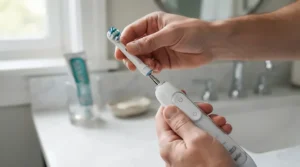
If the C1 SimplyClean is the house brand, the C2 Plaque Control is the dependable daily driver. The four-pack is sold as a one-year supply, and listings highlight BrushSync technology, a small chip that lets compatible handles track head wear.
The spec’s real-world meaning depends on your handle. BrushSync features only light up on BrushSync-capable models, such as the 4100 and 5100 families. On older handles, you’re still getting a perfectly good snap-on brush head; you just won’t get the smart reminder.
This is the head I’d steer most people toward if they own a recent Sonicare and want a no-drama default. Aggregated sentiment is notably strong: roughly 4.6 stars across several hundred ratings on one major retailer’s listing. Reviewers tend to praise consistent cleaning feel and easy fit. The recurring caution across genuine heads is simply cost.
Pros:
- ✅ Highest retailer rating among the genuine packs here
- ✅ BrushSync-ready for smart-reminder handles
- ✅ Four heads maps neatly to twelve months
Cons:
- ❌ Costs more per head than the six-pack
- ❌ Smart features wasted on non-BrushSync handles
Price range: roughly $30-$45 for four. Fair value if your handle uses BrushSync.
3. Philips Sonicare S2 Sensitive (HX6052/77, 2-Pack) — ultra-soft bristles for tender gums
The S2 Sensitive exists for a specific reader: the one who winces at the first pass over a gumline. Philips’ consumer care team confirmed on a retailer Q&A that the 2-pack is compatible with the ProtectiveClean 4100 and 6100 handles. A listing for the 4-pack variant cites over 3,000 ultra-soft bristles, so the tuft density is high and each filament is gentle.
Why that matters: the ADA notes that medium bristles can remove biofilm effectively but still recommends soft ones, because the risk of gum abrasion is lower. For anyone with receding gums, orthodontic hardware, or post-procedure tenderness, soft is the sensible default, not a luxury.
Reviewers on a major retailer list it around 4.4 stars across 170-plus ratings, and the language leans toward comfort rather than dramatic whitening claims. That’s honest framing. A soft head won’t polish like a premium whitening head, but it protects the very thing you’re brushing.
Pros:
- ✅ Ultra-soft bristles reduce gum irritation risk
- ✅ Philips-confirmed fit with 4100 and 6100 handles
- ✅ Good fit for braces or sensitive enamel
Cons:
- ❌ Two-pack runs out in about six months
- ❌ Less aggressive stain-lifting feel
Price range: typically $15-$25 per two-pack. Check current price, since variants differ.
4. Philips Sonicare A3 All-in-One (HX9092/77, 2-Pack) — premium head for premium handles
Here’s where the price ladder bends upward. The A3 All-in-One is Philips’ flagship-tier head, and retailer pricing works out to the mid-teens per head. At a three-month cycle, a year of A3 All-in-One heads means two two-packs, in the neighborhood of $60-$80 annually.
Does it earn that? On paper, premium heads add design refinements (denser, more varied bristle geometry) that Philips markets as deeper, more versatile cleaning. Retail ratings hover around 4.4-4.6 across a couple hundred reviews, which is good but not materially higher than the cheaper C2 Plaque Control. That gap is the honest takeaway: you’re paying for refinement, not a transformation.
My analytical take: this is for someone who owns a top-tier Sonicare handle, already likes the brand’s cleaning feel, and treats oral care as a place to spend. If you’re simply trying to keep a basic handle running, the C1 SimplyClean or C2 Plaque Control does 90 percent of the job at a fraction of the cost.
Pros:
- ✅ Philips’ premium head design
- ✅ Strong retailer ratings across hundreds of reviews
- ✅ Pairs naturally with higher-end handles
Cons:
- ❌ Highest cost per head in this guide
- ❌ Incremental, not dramatic, gains over the C2
Price range: around $30-$40 per two-pack. Worth it only if you value the upgrade.
5. Brushmo Plaque Control (BM928, 8-Pack) — two years of heads for the price of a lunch
The Brushmo Plaque Control is the archetype of universal replacement heads for sonic electric toothbrush shoppers: eight standard heads, marketed as compatible with Sonicare click-on handles, with soft DuPont-branded bristles. At a three-month cycle, eight heads covers two full years.
The math is persuasive. If a third-party pack lands in the typical $12-$20 range, your per-head cost drops to roughly $1.50-$2.50, versus several dollars for genuine packs. But this is where analysis should temper enthusiasm. The Dental Roundup comparison notes that third-party Sonicare-compatible heads exist but are less prevalent and sometimes fit less precisely, and other reviewers warn about aftermarket heads fraying faster.
I couldn’t verify a deep review pool for this specific model, so I won’t pretend otherwise. If you try it, run the fit check described later: snug seat, no rattle, quiet motor tone. Treat the first head as an audition.
Pros:
- ✅ Eight heads cover roughly two years
- ✅ Lowest cost per head among full-size options
- ✅ Soft-bristle positioning suits daily use
Cons:
- ❌ Fit precision varies across third-party makers
- ❌ Smart reminder features unlikely to work
Price range: typically $12-$20. Great value if fit checks out.
6. ELFIN 8-Pack Sonic Replacement Heads — the travel-bag and guest-room backup
The ELFIN 8-Pack takes the budget idea to its logical extreme. Deal coverage in 2026 pegged it well under $10, and each head ships with a protective cap. That cap is a quietly smart feature: it keeps bristles clean when a handle bounces around a gym bag, carry-on, or shared bathroom.
Interpret the price carefully, though. At roughly a dollar per head, you’re getting disposable-grade economics, which can be exactly right for a travel handle, a spare in the glove box, or a guest bathroom. It’s a harder sell as the only head on your daily-driver brush, because aftermarket heads are reported by some reviewers to lose their bristle shape sooner.
I couldn’t verify a trustworthy review sample for this particular listing, so treat it as an unrated budget option. If you buy it, set a firm replacement date and inspect the bristles at the six-week mark instead of waiting for three months.
Pros:
- ✅ Lowest cost per head in this guide
- ✅ Protective caps suit travel and storage
- ✅ Eight heads cover many backup uses
Cons:
- ❌ Limited verifiable review data
- ❌ May wear faster than genuine heads
Price range: under $10, though promotional pricing shifts. Check current price.
7. Waterpik Triple Sonic (STRB-3WW, 3-Pack) — the right answer if you already own a Waterpik
Not every sonic handle speaks Sonicare. The Waterpik Triple Sonic replacement heads are built for Waterpik’s own sonic handles, which makes them a poor choice for a Sonicare owner and the correct choice for a Waterpik owner. Retailer listings put the three-pack around the $20 mark, with ratings near 4.4 across roughly 300 reviews.
The lesson here is bigger than one product. When a brand runs a proprietary attachment, the head becomes a consumable you can only buy from the source or a small pool of compatibles. That reduces your price leverage but usually improves fit certainty. Per head, the Waterpik Triple Sonic lands in the mid-single-digit range, which sits between the genuine Sonicare packs and the budget eight-packs.
Reviewers on the listing generally describe it as a straightforward like-for-like replacement. If you’re shopping for a Sonicare handle, skip this one. If your handle says Waterpik on the barrel, it’s the obvious pick.
Pros:
- ✅ Exact-fit design for Waterpik Sonic handles
- ✅ Solid retailer rating across roughly 300 reviews
- ✅ Three-pack covers about nine months
Cons:
- ❌ Won’t fit Sonicare snap-on handles
- ❌ Smaller selection than the Sonicare ecosystem
Price range: around $20-$25 for three. Fair, with no alternative if you’re locked in.
Top 7 Head-to-Head Comparison
| Product | Heads per Pack | Price Range | Retailer Rating* | Best For |
|---|---|---|---|---|
| Philips Sonicare C1 SimplyClean | 6 | Around $30-$35 | About 4.4 | Value-minded genuine buyers |
| Philips Sonicare C2 Plaque Control | 4 | Roughly $30-$45 | About 4.6 | Everyday cleaning, BrushSync users |
| Philips Sonicare S2 Sensitive | 2 | Check current price | About 4.4 | Sensitive gums |
| Philips Sonicare A3 All-in-One | 2 | Around $30-$40 | About 4.4-4.6 | Premium-handle owners |
| Brushmo Plaque Control (BM928) | 8 | Typically $12-$20 | Not verified | Budget stockpilers |
| ELFIN 8-Pack | 8 | Under $10 | Not verified | Travel and backups |
| Waterpik Triple Sonic (STRB-3WW) | 3 | Around $20-$25 | About 4.4 | Waterpik Sonic owners |
*Ratings reflect retailer listings seen during research and change over time.
Read this table by price-per-head and by risk. The C2 Plaque Control earns the best rating of the genuine packs, while the C1 SimplyClean wins on cost. The unrated third-party options are cheap enough that an experiment costs little, but only the genuine packs and the Waterpik Triple Sonic have a verifiable review pool behind them. If you want fewer surprises, stay in the top four rows.
✨ Ready to Refresh Your Brush?
🔍 Take your daily routine to the next level with these carefully selected heads. Click any highlighted product name to check current pricing and availability, then pick the pack that matches your handle and your gums. Your teeth will notice the difference!
How to Choose Replacement Brush Heads Compatible With Sonic Toothbrushes
Short answer: match the attachment system, then the bristle firmness, then the pack size. Here’s the sequence I’d follow:
- Confirm your handle model. Look on the underside or in the manual. Model numbers decide compatibility far more than brand logos do.
- Match the attachment system. Sonicare click-on, Waterpik, quip, and Oral-B iO are separate worlds. “Sonic” alone isn’t a fit guarantee.
- Pick bristle firmness. The ADA favors soft bristles for gum protection, so default to soft unless a dentist says otherwise.
- Decide genuine or third-party. Genuine gives predictable fit and smart-reminder support. Third-party gives savings and more risk.
- Choose pack size by cycle. Divide your annual need by heads per pack. One person needs about four heads a year, a family of four about sixteen.
- Check smart features. BrushSync only pays off on compatible handles. Don’t pay for chips your handle can’t read.
- Read recent reviews, not just stars. Scan for words like “loose,” “rattles,” or “frays” in the newest feedback.
Universal Replacement Heads for Sonic Electric Toothbrush: What “Universal” Really Means
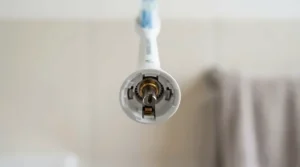
The phrase universal replacement heads for sonic electric toothbrush is doing more marketing work than engineering work. In practice, “universal” usually means “fits the Sonicare click-on system,” which is the de facto standard. The Dental Roundup comparison notes that every Sonicare model since the DiamondClean generation shares the same attachment, so heads from different Sonicare families interchange across those handles.
That’s real convenience, but it isn’t true universality. Waterpik, quip, and Oral-B iO handles reject Sonicare-style heads. A retailer guide also warns that poorly fitting copies can increase noise and, in the worst case, damage the device.
So how do you test a “universal” head? Seat it fully, tug gently to feel for wobble, and run the handle for a few seconds before it touches your mouth. A pitch that sounds higher, rougher, or rattly than usual is a rejection signal. A quality fit sounds like the head you replaced.
The expert takeaway: treat universal replacement heads for sonic electric toothbrush listings as “compatible with a named system,” then verify that the named system matches your handle. If a listing doesn’t name any, move on.
Sonic Toothbrush Refill Heads Multipack: Doing the Cost-Per-Head Math
A sonic toothbrush refill heads multipack looks like a bargain because the sticker is small and the pack count is big. The honest test is cost per head and cost per year, so let’s run it.
| Pack | Heads | Estimated Cost per Head | Months Covered (3-Month Cycle) |
|---|---|---|---|
| C1 SimplyClean | 6 | Roughly $5-$6 | About 18 |
| C2 Plaque Control | 4 | Roughly $7-$11 | About 12 |
| A3 All-in-One | 2 | Mid-teens | About 6 |
| Brushmo Plaque Control | 8 | Roughly $1.50-$2.50 | About 24 |
| ELFIN 8-Pack | 8 | About $1 | About 24 |
| Waterpik Triple Sonic | 3 | Roughly $6-$8 | About 9 |
Estimates derived from price ranges at the time of research.
For one person, genuine heads run roughly $20-$45 a year, while budget packs run about $4-$10. For a family of four, that scales to roughly $80-$180 versus $16-$40. Even if a budget head wears out a little sooner, you can replace it twice as often and still come out ahead.
The catch is quality variance, not arithmetic. Gear Patrol points out that Sonicare heads cost more than Oral-B’s, and Dental Roundup cites genuine Sonicare heads at $7-$12 each while aftermarket ones can run $2-$3. If you buy a sonic toothbrush refill heads multipack from a third party, start with a small test pack, confirm fit and bristle quality, and then commit to the big one.
Bristle Wear Indicator: How It Works and When to Trust It
A bristle wear indicator is the little colored cue on a brush head that tells you when to replace it. On Sonicare snap-on heads, it’s called reminder bristles: the colored filaments fade with use. Philips’ product documentation says to replace heads every three months because bristles show fatigue by then, and the fading color is the visual prompt.
There are two kinds of bristle wear indicator worth knowing:
- Color-fade bristles. Cheap, visual, and easy to understand. The weakness is that your brushing pressure, not the calendar alone, determines wear.
- Sensor-based tracking (BrushSync). A chip in the head lets compatible handles monitor brushing time and pressure, and a handle light shifts to yellow as the head wears. Documentation notes that if a handle supports a single BrushSync feature, it’s the replacement reminder.
Neither replaces your own eyes. A dentist quoted in a Reader’s Digest piece advises that fading color shouldn’t be your only trigger. Look for splayed, bent, or matted bristles. Also expect third-party heads to lack a working bristle wear indicator on smart handles, since the chip is the genuine part.
Practical rule: trust the indicator as a reminder, not a verdict. Replace at three months, or sooner if bristles flare out.
Brush Head Replacement Schedule: A Practical Calendar You’ll Actually Follow
A brush head replacement schedule only works if it’s automatic. Start with the baseline: the ADA says three to four months, and manufacturer guidance leans toward three. Some oral-care brands push closer to two to three months for aftermarket heads, which tend to fray earlier.
Build it like this:
- Day one: Write the install date on the head’s neck with a permanent marker, or set a phone reminder 12 weeks out.
- Week 6: Do a quick bristle check. Heavy pressure shortens head life.
- Week 12: Replace it. Don’t wait for the bristles to disaster-flare.
- After illness: Swap once you feel better. Oral-B and GoodRx-style guidance both recommend a fresh head after being sick.
Adjust for real-life wear:
- Crowns and fillings can chew up bristles faster, a point raised by a dentist in the Reader’s Digest piece.
- Hard brushers should shorten their brush head replacement schedule to 8-10 weeks.
- Kids often brush briskly and chew the head, so check monthly.
For multipacks, stagger the use. Label the bag with the date you open each head, or put the next three in a jar by the sink so the swap becomes a habit instead of a project.
Snap-On Brush Head Setup and Care Guide
Swapping a snap-on brush head takes ten seconds, but doing it well protects the handle’s motor and your gums. Follow this routine:
- Pull straight off. Don’t twist. A gentle tug releases the old snap-on brush head.
- Rinse the stem. Wipe away toothpaste residue from the handle shaft, then dry it.
- Seat the new head fully. Push until it stops. A half-seated snap-on brush head rattles and wears the stem.
- Run a two-second test. Listen for a smooth tone. Rough or loud means re-seat or reject it.
- Rinse after brushing. Keep the head upright to air dry.
- Keep heads apart. Don’t let your brush touch another person’s, since cross-contact is a hygiene issue noted by clinical guidance.
Common first-30-day mistakes: forcing a mismatched head onto the stem, leaving a wet head in a closed travel case, and forgetting to log the install date. Fix those three and you’ve handled most of what can go wrong.

Real-World Scenarios: Matching Heads to Households
Scenario 1: A family of four on a budget. You need sixteen heads a year. Genuine C1 SimplyClean packs are the safest route, while the Brushmo Plaque Control eight-pack cuts cost dramatically if fit checks out. A sensible split: genuine for the adults with decades of enamel to protect, budget heads for backup supply.
Scenario 2: A solo adult with sensitive gums. The S2 Sensitive is the logical anchor, replaced every twelve weeks. Spend a bit more per head and avoid the temptation to stretch the cycle.
Scenario 3: A frequent traveler. Keep a daily-driver genuine head at home and toss a capped ELFIN 8-Pack head in the carry-on. The cap protects the bristles; the low cost means you won’t agonize about leaving one behind.
Scenario 4: A premium handle owner who wants the best. The A3 All-in-One pairs naturally with a high-end handle. Budget around $60-$80 a year and treat it as a deliberate splurge.
Notice what these have in common: they match budget, environment, and frequency of use, not just a spec sheet.
Common Mistakes When Buying Replacement Brush Heads Compatible With Sonic Toothbrushes
Most disappointments with replacement brush heads compatible with sonic toothbrushes come from a short list of avoidable errors:
- Buying by brand, not by system. “Sonic” and “Philips” don’t guarantee a fit. The attachment decides.
- Ignoring handle exclusions. The Philips One, for example, isn’t compatible with the standard snap-on heads according to one retailer spec.
- Chasing discontinued models. Philips’ own pages list some older ProResults head numbers as no longer available. Verify the current model.
- Defaulting to medium bristles. Soft is the safer ADA-aligned starting point.
- Trusting star ratings alone. A 4.5 average hides fit complaints in the newest reviews.
- Overstocking untested third-party packs. Buy a small test set first.
Fix these and your next order goes smoothly.
Genuine vs Third-Party Sonic Brush Heads: A Written Comparison
Does genuine matter? It depends on what you’re protecting: your gums, your handle, or your wallet.
| Factor | Genuine Sonicare Heads | Third-Party Multipacks | Stretching an Old Head |
|---|---|---|---|
| Fit precision | Predictable | Variable | Already seated |
| Smart reminders | Supported on compatible handles | Typically unsupported | None |
| Cost per head | Higher | Much lower | Free, but costly in cleaning |
| Bristle durability | Consistent | Reported to vary | Declines with every week |
| Best For | C1 SimplyClean, C2 Plaque Control | Brushmo Plaque Control, ELFIN 8-Pack | No one |
The table makes the trade-off clear. Genuine heads buy predictability, while third-party packs buy savings and a bit of lottery. Expert Reviews says buying third-party heads is fine if you know what you’re getting, which is a fair summary: inspect early, expect variation, and don’t pay for smart features that won’t work.
The worst option isn’t third-party. It’s stretching a worn head. The ADA notes that effectiveness drops as bristles wear, so the “free” choice quietly costs you cleaning power.
Safety, Hygiene, and Compatibility Guide
Replacement heads are low-risk products, but a few habits matter. Choose soft bristles unless a dentist advises otherwise. Replace a head after illness. Rinse and dry between uses.
For third-party heads, inspect a new head for loose bristles before the first use, and discard any head that sheds filaments. Keep small head packs away from toddlers, since individual heads are small parts. Look for sealed packaging, and store spares dry.
If you want more background on how powered brushes work and how designs differ, Wikipedia’s overview of electric toothbrushes is a reasonable primer. Always defer to your dentist for anything specific to your teeth or gums.

Frequently Asked Questions About Replacement Brush Heads Compatible With Sonic Toothbrushes
❓ Can I use a Waterpik head on a Sonicare handle?
❓ How many heads does a family of four need each year?
❓ Will third-party heads work with BrushSync handles?
❓ Are soft heads okay to use every day?
❓ Should I replace my head after being sick?
Conclusion
Here’s the short version. If you want certainty, buy genuine: the C1 SimplyClean for the lowest cost per swap, the C2 Plaque Control for the best all-around rating, the S2 Sensitive for tender gums, or the A3 All-in-One if you want Philips’ premium head. If you want savings and can tolerate some fit variance, the Brushmo Plaque Control and ELFIN 8-Pack are low-risk experiments. And if your handle says Waterpik, the Waterpik Triple Sonic is the only sensible answer.
The bigger point is that replacement brush heads compatible with sonic toothbrushes are only as good as your discipline. A fresh head every three months, checked by eye and logged on a calendar, matters more than any single brand. Match the attachment, pick soft bristles, and set the reminder today.
Recommended for You
- [Add your blog post link 1]
- [Add your blog post link 2]
- [Add your blog post link 3]
Disclaimer: This article contains affiliate links. As an Amazon Associate, I earn from qualifying purchases. If you purchase products through these links, we may earn a small commission at no additional cost to you.
✨ Found this helpful? Share it with your friends! 💬🤗
