In This Article
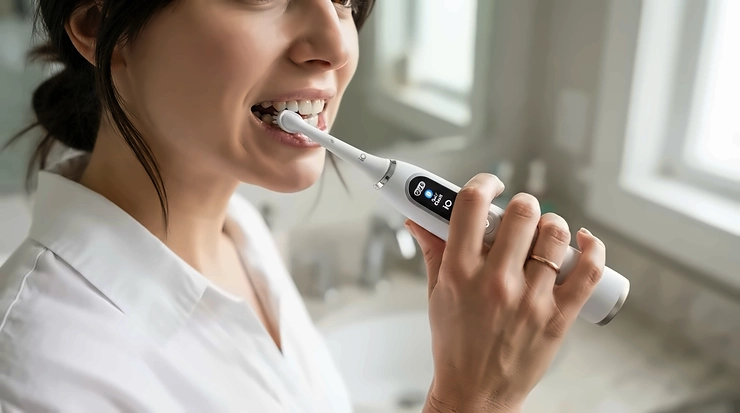
Here’s the cruel joke of oral hygiene: the people who try hardest often do the most damage. If you scrub like you’re removing a stubborn stain from a kitchen counter, a sonic toothbrush with pressure sensor for heavy brushers is arguably the single most useful upgrade you can make. It does the one thing a manual brush never will. It tells you, in real time, to ease off.
The stakes are real. Gum tissue behaves like skin, and it can be scrubbed thin. Over years, heavy-handed brushing is widely linked to gingival recession, enamel abrasion and that zingy cold-water sensitivity nobody asked for. Dentists keep repeating the same advice: soft bristles, light pressure, patient technique. The trouble is that you can’t feel your own force. A sensor can.
This guide covers seven real, currently sold brushes with built-in pressure feedback. Five are sonic. Two are oscillating-rotating Oral-B models, included because many heavy brushers cross-shop them and the comparison is worth having. Prices are ranges, ratings reflect aggregated listing and expert-roundup sentiment (not invented quotes), and every spec comes with a plain-English translation.
Nothing here is a substitute for a dental exam. A sensor is a coach, not a cure.
Quick Comparison: The 7 Best Pressure-Sensing Brushes at a Glance
| Product | Technology | How It Warns You | Approx. Price Range* | Best For |
|---|---|---|---|---|
| Philips Sonicare 4100 | Sonic | Pulsing sound plus automatic vibration reduction | Under $50 | Budget-conscious beginners |
| Philips Sonicare ProtectiveClean 5100 | Sonic | Pressure sensor with pulse feedback | ~$70–$110 | All-round daily use |
| Philips Sonicare ProtectiveClean 6100 | Sonic | Pressure sensor, multiple modes and intensities | ~$100–$150 | Sensitive or receding gums |
| Philips Sonicare DiamondClean Smart 9300 | Sonic | Pressure sensor plus app coaching | ~$190–$230 | Data-driven premium buyers |
| SURI 2.0 | Sonic | Sensor signal to ease off | ~$100–$170 | Travelers and design lovers |
| Oral-B iO Series 3 | Oscillating (micro-vibrations) | Red/white/green light ring | ~$80–$110 | Visual-feedback fans |
| Oral-B Pro 1000 | Oscillating-rotating | Pulsations slow or stop under heavy pressure | Around $50 | Budget oscillating option |
*Approximate; prices vary by retailer, bundle and region. Check current price before buying.
Looking at the table, the Philips Sonicare 4100 is the cheapest way to get a sonic brush that actively throttles your force. If you want to see your pressure rather than hear it, the Oral-B iO Series 3 is the clearest feedback in this lineup. The Philips Sonicare DiamondClean Smart 9300 is the only one that adds an app layer, and you pay a hefty premium for it.
💬 Just one click — help others make better buying decisions too!😊
Top 7 Sonic and Pressure-Sensing Toothbrushes: Expert Analysis
Each pick below follows the same logic: what the spec means in practice, who it suits, what aggregated reviews consistently say, and whether the price makes sense. No hands-on testing is claimed here. This is analysis built from manufacturer specs, expert roundups and listing-level review patterns.
1. Philips Sonicare 4100 — cheapest sonic force-limiter
For under $50, the Philips Sonicare 4100 delivers the feature heavy brushers actually need. It skips apps and screens entirely, which is both its charm and its limit.
The built-in sensor detects how hard you press, warns you with a pulsing sound, and automatically reduces vibration. In practice, that means the brush gets weaker the harder you push, a quiet nudge toward a lighter touch. Two intensity settings, a gradual power ramp-up and a two-minute timer with pacing round out the basics. Philips rates battery life at roughly two weeks.
Analytically, this is the pick for someone who wants guardrails without gadgetry. NBC Select named it the best basic electric toothbrush, noting the ergonomic handle and two intensity levels.
Aggregated reviews skew positive, with listing ratings in the low-to-mid 4-star range across tens of thousands of ratings. Reviewers praise the simplicity and battery life. A recurring complaint is that the pressure alert and the timer alert can be hard to tell apart.
Pros:
- ✅ Automatically reduces vibration under heavy pressure
- ✅ Roughly two weeks of battery per charge
- ✅ Simple, no-app operation with two intensities
Cons:
- ❌ Pressure and timer alerts can feel similar
- ❌ Only one cleaning mode
Price range: under $50. Strong value, and the obvious starting point. Some roundups list an ADA Seal for it while others don’t, so verify on the ADA’s product listing.

2. Philips Sonicare ProtectiveClean 5100 — best all-rounder with a travel case
Step up from the entry model and the Philips Sonicare ProtectiveClean 5100 adds flexibility. It carries a pressure sensor, three cleaning modes, a timer with quadrant pacing, a roughly 14-day battery and a travel case.
What does that mean for a heavy brusher? Multiple modes let you drop into a gentler setting when your gums feel tender, instead of fighting a single fixed power level. The pacer helps you spread time across the mouth, so you don’t over-scrub one corner out of boredom. The travel case matters too, because disrupted routines are when old scrubbing habits creep back.
Based on the spec comparison, this is the model for people who found the Sonicare 4100 a touch too basic but don’t need an app. Several 2026 roundups describe it as the best electric toothbrush for most people.
On review sentiment, individual verified review counts were difficult to confirm across sources, so treat the “crowd favorite” label with a pinch of salt. What can be said: it shares the ProtectiveClean family’s pressure-warning design, and that family is consistently recommended for gum-conscious users.
Pros:
- ✅ Three modes let you tailor intensity
- ✅ Travel case included in the box
- ✅ Timer and pacer encourage even coverage
Cons:
- ❌ Costs more than the Sonicare 4100 for similar sensor behavior
- ❌ No app or position tracking
Price range: roughly $70–$110, so check current price. Good value if you’ll actually use the extra modes.
3. Philips Sonicare ProtectiveClean 6100 — most adjustable for sensitive gums
The Philips Sonicare ProtectiveClean 6100 is the sensitive-gum specialist. Spec roundups list a pressure sensor with three modes across three intensities, and one 2026 receding-gum guide made it their editor’s choice.
Nine mode-and-intensity combinations may sound like marketing fluff, but for a heavy brusher with tender spots, it’s practical. You can dial intensity down on days your gums feel raw and still get the pressure safeguard. The mechanism is the same ProtectiveClean idea: the brush warns you and eases its motion when you push too hard.
The honest caveat: lower intensity does not fix poor technique. If you press hard on a gentle setting, you’re still pressing hard. The sensor is the real protection, and the intensity dial is the comfort layer.
This is the pick for someone who wants more customization than the Sonicare 5100 without paying app-level money. It also suits people already seeing early signs of gum irritation, though a dentist should confirm what’s causing it.
Review sentiment here is thinner than for the Sonicare 4100. Roundups are positive, but I couldn’t verify large aggregated review pools for specific US listings, so lean on the family reputation.
Pros:
- ✅ Nine mode-and-intensity combinations
- ✅ Pressure sensor suits tender gums
- ✅ Same trusted sonic platform as cheaper models
Cons:
- ❌ Pricier than the Sonicare 5100
- ❌ Fewer verifiable owner reviews than budget models
Price range: roughly $100–$150, so check current price. Worth it if gum sensitivity is your main concern.
4. Philips Sonicare DiamondClean Smart 9300 — app-guided premium coaching
At the top of the Sonicare ladder, the Philips Sonicare DiamondClean Smart 9300 (model HX9903) pairs a pressure sensor with an app, brush-head detection, four modes and three intensity levels.
The app is the real differentiator. Instead of a beep and a shrug, you get feedback you can review afterward, which suits people who respond to data. Brush-head detection also helps your brushing adapt to the attachment you’ve snapped on.
Does a heavy brusher need this? Not strictly. The sensor logic is what protects your gums, and cheaper models share the core idea. What the Sonicare 9300 adds is accountability. If you’re the type who improves when you can see a score, this is the model that gives you one.
Listing ratings on large retailers sit in the mid-4-star range across a few hundred reviews, with a mix of praise for the polished feel and frustration at the price. Frequent promotions bring it down from list price, so patience can pay off.
Pros:
- ✅ App-based feedback you can review over time
- ✅ Four modes and three intensities for customization
- ✅ Brush-head detection adds smart convenience
Cons:
- ❌ Costs several times the budget sonic options
- ❌ App dependence adds complexity some people don’t want
Price range: roughly $190–$230. Premium pricing for premium coaching; only worth it if you’ll use the app.
5. SURI 2.0 — travel-ready sonic with a sensor
The SURI 2.0 is the design-forward wildcard. Electric Teeth named it Editor’s Choice, citing the new pressure sensor, a more powerful motor, inductive charging and a travel lock, all packed into the same slim form factor as version 1.
Translated: the sensor signals you to ease off, the motor delivers stronger cleaning than the original, and the travel lock prevents accidental power-ups in a suitcase. Inductive charging means no fiddly ports. It’s a brush built for people who care how it looks on a bathroom counter and how it behaves in a carry-on.
Is it a good fit for heavy brushers? Yes, provided you value the sensor more than the aesthetics. It sits in a premium bracket, so you’re partly paying for design and sustainability positioning, which some roundups praise.
Review depth is the weak spot. Expert coverage is strong, but the volume of verified owner reviews is smaller than for Philips or Oral-B, so long-term durability is less proven.
Pros:
- ✅ Pressure sensor added in the 2.0 update
- ✅ Travel lock and inductive charging
- ✅ Slim, design-conscious body
Cons:
- ❌ Costs noticeably more than budget sonic picks
- ❌ Smaller review base than established brands
Price range: roughly $100–$170 depending on region and bundle, so check current price. Best for frequent travelers.
6. Oral-B iO Series 3 — clearest visual pressure feedback
Technically not sonic, the Oral-B iO Series 3 earns its spot because its pressure feedback is the easiest to read. A light ring glows red when you press too hard, white when you’re too gentle and green when you’re in the zone.
That three-state system matters for heavy brushers. Most sensors only say “stop.” This one also tells you when you’ve overcorrected and gone too light, which helps you find the sweet spot rather than guessing. Electric Teeth called its implementation one of the best recent enhancements to electric toothbrushes and rated it their best Oral-B.
The trade-off is the round head’s feel and the ongoing cost. iO-specific brush heads cost more than standard ones, so the total cost of ownership climbs over time. There’s also no Bluetooth on this model, which keeps it simple.
For someone choosing between the Sonicare 4100 and this, the question is hearing versus seeing. If you brush while distracted or the bathroom is noisy, a visible ring is hard to miss. Reviews are very positive in expert coverage, with listing ratings strong as well.
Pros:
- ✅ Red, white and green ring is instantly readable
- ✅ Flags too-light brushing, not just too-hard
- ✅ Premium-feeling handle without Bluetooth complexity
Cons:
- ❌ iO brush heads cost more over time
- ❌ Oscillating action, not sonic
Price range: roughly $80–$110, so check current price. Great for visual learners.
7. Oral-B Pro 1000 — budget oscillating benchmark
The Oral-B Pro 1000 is the veteran benchmark. Around $50, it uses an oscillating-rotating round head, and its pressure sensor automatically stops the pulsations when it detects excessive force.
What does that mean for a heavy brusher? The brush effectively refuses to reward scrubbing. Some reviewers point out a quirk: there’s no obvious warning signal, so you may not realize why the brush feels different. That’s a genuine limitation for coaching, though the protective behavior still happens.
It’s a perennial favorite in expert rankings, with several major roundups placing it at or near the top for value, and Oral-B power brushes were the first to earn the ADA Seal of Acceptance in 2017. NBC Select highlighted it for sensitive teeth.
Aggregated listing ratings land around the mid-4-star range across thousands of reviews. The main gripe is bulk and feel rather than performance.
Pros:
- ✅ Pulsations stop automatically under heavy pressure
- ✅ Affordable, widely available replacement heads
- ✅ Strong expert-ranking track record
Cons:
- ❌ No clear visible warning when the sensor engages
- ❌ Not a sonic toothbrush
Price range: around $50. Excellent value if oscillating suits you.
✨ Don’t Miss These Exclusive Deals!
🔍 Take your brushing routine to the next level with these carefully selected products. Click on any highlighted item to check current pricing and availability. These brushes will help you build a gentler, healthier habit your gums will thank you for!
Your First 30 Days: A Practical Usage Guide
Buying the brush is the easy part. Retraining your hand is where the actual protection happens. Here’s a first-month plan that goes beyond the instruction leaflet.
Week one: expect nagging. If the alert fires constantly, that’s the sensor doing its job, not a defect. Hold the handle in a pen grip with fingertips, not a fist. Place the bristles at roughly 45 degrees to the gumline and let the brush glide without pushing.
Week two: shorten your strokes. Sonic and oscillating motors do the scrubbing. Your job is guiding, tooth by tooth, for about 30 seconds per quadrant. Dentists consistently describe bent or splayed bristles as the clearest sign of excess pressure.
Weeks three and four: audit yourself. Check the bristles weekly. Frayed heads within a couple of weeks suggest you’re still pressing too hard. Swap heads about every three months, or sooner if they flare.
Common first-month mistakes:
- Cranking intensity up to compensate for lighter pressure
- Using a back-and-forth scrubbing motion at the gumline
- Ignoring alerts because “it feels clean”
- Brushing right after acidic foods, when enamel is temporarily softer
For official technique guidance, the ADA’s consumer site MouthHealthy is a reliable reference. Pair it with a dental checkup, so a professional can confirm whether any existing wear needs attention.
Real-World Scenarios: Three Heavy Brushers, Three Picks
Specs are abstract. Here’s how the choices play out for three realistic profiles.
Scenario 1: The budget-conscious college student. Brushing twice daily, living in a shared bathroom, wanting something that survives a backpack. The Philips Sonicare 4100 under $50 covers the essentials, or the Oral-B Pro 1000 if oscillating action appeals. The student’s priority is a cheap guardrail, not smart features. A used-brush-head habit is the main danger, so setting a phone reminder every three months matters.
Scenario 2: The night-time clencher with early gum irritation. This person brushes hard and may also grind teeth, which stacks risk factors on the same few teeth. The Philips Sonicare ProtectiveClean 6100 gives intensity control, while the Oral-B iO Series 3 offers a visible ring for sleepy mornings. Budget is mid-range, usage is twice daily, and a dentist visit should come first to rule out gum disease.
Scenario 3: The frequent traveler and data fan. Hotel bathrooms, irregular schedules, a desire to see progress. The SURI 2.0 handles the suitcase side with its travel lock, while the Philips Sonicare DiamondClean Smart 9300 suits someone who wants app-tracked improvement and has the budget.
The pattern: match the feedback style to your habits. Noisy bathroom? Choose visual. Easily distracted? Choose automatic power reduction. Motivated by numbers? Choose app-based.
Problem → Solution: Fixing Common Pressure-Sensor Frustrations
Even good brushes create friction. Here are the most common complaints and practical fixes.
Problem 1: The alert fires constantly. Solution: relax your grip, shorten your strokes and lower the handle’s angle. Constant alerts early on are normal. If they persist after several weeks, check that the head is seated properly.
Problem 2: You can’t tell the pressure alert from the timer. This is a known complaint with the Philips Sonicare 4100. Solution: learn the pattern by deliberately pressing hard once, then lightly. If that’s still confusing, a visual option like the Oral-B iO Series 3 removes the ambiguity.
Problem 3: Bristles flare within weeks. Solution: you’re still pressing too hard, or the head is old. Replace it and recheck technique.
Problem 4: Teeth feel sensitive after switching. Solution: use a lower intensity mode, such as on the Philips Sonicare ProtectiveClean 6100, and see a dentist if sensitivity persists. Sensitivity can have several causes.
Problem 5: You feel the brush isn’t cleaning enough. Solution: a gentler touch can feel less satisfying at first. Trust the two-minute timer and even coverage rather than scrubbing force. Plaque comes off through motion and time, not muscle.
What Is a Sonic Toothbrush With Pressure Sensor for Heavy Brushers?
A sonic toothbrush with pressure sensor for heavy brushers is a powered brush that cleans with high-frequency vibrations while monitoring how hard you press. When you exceed a safe threshold, it warns you, slows its motion or both. It’s designed to protect gums and enamel from the abrasion that forceful scrubbing causes.
The sonic part drives fluid between teeth and along the gumline, so cleaning comes from motion rather than muscle. The sensor part acts as a built-in coach.
Why does this combination matter? Because electric brushes alone aren’t automatically gentler. A powered brush pressed hard still wears gums and enamel. The sensor is what closes the loop.
Two honest limits apply. First, a sensor can’t diagnose gum disease or repair existing recession. Second, not every sensor works the same way. Some warn, some reduce power, some do both. Knowing which style fits your habits is the whole decision.
How to Choose a Pressure-Sensing Sonic Toothbrush
- Pick your feedback style. Sound, vibration change or light ring? Choose the one you’ll actually notice mid-brush.
- Check whether power drops automatically. Auto-reduction is protective even when you ignore the alert.
- Confirm intensity options. If your gums are tender, lower settings give breathing room.
- Weigh head costs. Proprietary heads, like the pricier iO ones, raise total cost over years.
- Decide on app features. Useful for data-driven people, unnecessary for everyone else.
- Verify certifications. Check the ADA listing for your exact model instead of assuming.
- Think about travel. A travel case or lock matters if you’re mobile.
Reasoning behind the list: the sensor is the priority, and everything else is preference. A brush with a great motor and no sensor, such as the budget Aquasonic Vibe, gives no feedback when you press too hard, which is exactly the gap heavy brushers need filled.
Pressure Sensor Feedback: What the Alerts Actually Tell You
Pressure sensor feedback comes in several flavors, and they’re not interchangeable. Understanding the difference helps you pick a brush that fits your temperament.
| Feedback Type | How It Works | Strength | Weakness | Best For |
|---|---|---|---|---|
| Pulse plus power reduction (Philips Sonicare 4100, Sonicare 5100, Sonicare 6100) | Sound pulses and motion eases off | Protective even if ignored | Can be confused with timer | Habitual heavy pressers |
| Light ring (Oral-B iO Series 3) | Red, white or green glow | Instantly readable, flags too-light | Needs you to look | Visual learners |
| Pulsation stop (Oral-B Pro 1000) | Motion halts under pressure | Simple and automatic | Little visible warning | Minimalists |
| App coaching (Philips Sonicare DiamondClean Smart 9300) | Review sessions afterward | Builds long-term awareness | Needs phone and discipline | Data-driven brushers |
The analysis: automatic power reduction is the most forgiving design because it protects you even on distracted mornings. Visual rings are the most educational, because they teach the target pressure rather than only punishing excess. If you struggle to feel your own force, start with one that teaches. If you simply forget, start with one that intervenes.
Brushing Force: How Hard Is Too Hard?
Brushing force is the variable most people never measure. A common dentist rule of thumb: if you’re scrubbing with the energy you’d use on grout or a countertop, you’re pressing too hard. Another quick test is the bristles. If they bend or flatten and fray within a couple of weeks, force is likely excessive.
Independent testing of one pressure-sensing brush, reported in an enthusiast review, observed pulsation stopping above roughly 3.8 newtons. That’s a single data point from one reviewer rather than a universal standard, but it illustrates the idea: the safe window is small, lighter than most people assume.
The gentle way to calibrate is simple. Hold the handle with fingertips only, as if holding a pen. You can’t generate much force that way, which is the point. Let the brush’s motion work. Your hand’s only job is to move it from tooth to tooth.
Also remember that harder doesn’t mean cleaner. Plaque is soft, and mechanical sweeping with proper angles and time removes it. Excess pressure mainly wears tissue.
Enamel Wear: What Heavy Brushing Actually Does to Teeth
Enamel wear from brushing is slow, quiet and mostly invisible until it isn’t. Brushing too hard can wear down enamel and expose the porous dentin beneath, which is why cold drinks start to sting.
Colgate’s overview of toothbrush abrasion describes the telltale signs: worn, shiny spots near the gumline and V-shaped notches where tooth structure has been ground away. Left unchecked, abrasion can contribute to sensitivity, decay and, in severe cases, tooth loss.
Two things deserve emphasis. First, abrasive toothpaste can accelerate the wear, so heavy brushers should pair a pressure-sensing brush with a gentle, fluoride toothpaste. Second, lost enamel doesn’t grow back. That’s why prevention beats repair, and why a sensor makes more sense before damage than after.
If you already see notches or feel persistent sensitivity, book a dental visit. A brush can stop further wear, but it can’t rebuild what’s gone. Think of the sensor as a seatbelt rather than a surgeon.
Sonic Toothbrush That Prevents Gum Damage: The Honest Version
Let’s be precise about the phrase “sonic toothbrush that prevents gum damage.” No brush guarantees prevention. What a good pressure-sensing sonic brush does is lower one specific risk: abrasion from excess force.
Gums recede through two different routes. One is external wear, as in hard brushing. The other is internal, when gum disease destroys the bone beneath the tissue. A sensor addresses only the first. If your gums bleed regularly or look swollen, that’s a dentist conversation, not a gadget purchase.
Where sonic motion helps is in cleaning along the gumline through fluid movement rather than scrubbing. Combined with a sensor, it makes gentle brushing effective, which removes the temptation to compensate with muscle.
Practical stance: treat the brush as one layer of protection. Layer it with a soft head, a 45-degree angle, short strokes and regular checkups. The combination is what genuinely protects tissue, and the sensor keeps you honest about the part you can’t feel.
Electric Toothbrush With Pressure Alert for Aggressive Brushing: Sonic vs Oscillating vs Manual
An electric toothbrush with pressure alert for aggressive brushing can be sonic or oscillating, and each has a personality. Sonic brushes vibrate side to side at high speed, with a slimmer, more traditional head. Oscillating models, like Oral-B’s, use a small round head that rotates and pulses.
| Option | Pressure Feedback | Cleaning Style | Main Advantage | Best For |
|---|---|---|---|---|
| Manual brush | None | Hand scrubbing | Cheap and simple | Careful, light-handed brushers |
| Electric brush without sensor | None | Powered motion | Better consistency | Brushers who already use light force |
| Philips Sonicare 4100 | Pulse plus power drop | Sonic | Guardrails on a budget | Heavy brushers who want sonic |
| Oral-B iO Series 3 | Light ring | Oscillating | Visible, teachable feedback | Visual learners |
The analysis: a manual brush gives you nothing to counter heavy pressure, and a non-sensor electric brush amplifies the problem if you press hard. Pressure-sensing models are the only category that actively corrects the habit. Between sonic and oscillating, expert clinical comparisons tend to give oscillating a slight edge on plaque in some data, so the decision comes down to feel and feedback style. Pick the one you’ll use consistently.
Long-Term Cost and Maintenance
The sticker price tells only part of the story. Three costs shape your real spend: the handle, replacement heads and eventual battery wear.
| Product | Price Range | Head-Cost Note | Value Verdict | Best For |
|---|---|---|---|---|
| Philips Sonicare 4100 | Under $50 | Standard clip-on heads | Excellent | Budget buyers |
| Oral-B Pro 1000 | Around $50 | Affordable standard heads | Excellent | Value seekers |
| Oral-B iO Series 3 | ~$80–$110 | Pricier iO-specific heads | Good, with ongoing cost | Visual learners |
| Philips Sonicare DiamondClean Smart 9300 | ~$190–$230 | Premium line heads | Premium only if app is used | Gadget lovers |
Reading the table: cheap handles with standard heads win on total cost, while premium models make sense only if you’ll use their extras. Heads need replacing roughly every three months, so over three years that’s a dozen heads. Frayed or splayed bristles also signal excess pressure, so frequent replacement can double as a self-check. Wipe the handle, rinse the head after use and let it air dry.
Frequently Asked Questions
❓ How do I know if my pressure sensor is actually working?
❓ Can I use a pressure-sensing brush if my gums are already receding?
❓ Is sonic or oscillating better for someone who scrubs hard?
❓ How long until I stop triggering the pressure alert?
❓ Do I need an app for useful pressure sensor feedback?
Conclusion: Let the Brush Do the Hard Work
If you take one idea from this guide, make it this: force is not cleaning power. A sonic toothbrush with pressure sensor for heavy brushers swaps muscle for motion and gives you real-time feedback on the one variable you can’t feel.
For most people, the Philips Sonicare 4100 is the sensible entry point, protecting gums for under $50. If you want multiple modes, the Philips Sonicare ProtectiveClean 5100 or Sonicare 6100 step up smoothly. Visual learners should look hard at the Oral-B iO Series 3, and the Oral-B Pro 1000 remains a strong oscillating value pick. The Philips Sonicare DiamondClean Smart 9300 and SURI 2.0 suit those who want smart coaching or travel-ready design and don’t mind paying for it.
Pair whichever brush you choose with soft bristles, a 45-degree angle, a gentle toothpaste and regular dental checkups. Your gums don’t regenerate, so prevention is the whole game.
✨ Ready to protect your smile?
🔍 Click any highlighted product above to check current pricing and availability, then choose the brush that fits your habits. Your enamel, and your gums, will thank you for the lighter touch!
Recommended for You
- [Add your blog post link 1]
- [Add your blog post link 2]
- [Add your blog post link 3]
Disclaimer: This article contains affiliate links. As an Amazon Associate, I earn from qualifying purchases. If you purchase products through these links, we may earn a small commission at no additional cost to you.
✨ Found this helpful? Share it with your friends! 💬🤗
